
Preparation Seminars

Every Day from 9.30 to 11 am and 4:30 to 6.15 pm
Nurturing the Foundations of Life:
Supporting the self-development of the teacher
Early Years
These workshops will explore the importance of the kindergarten teacher’s self-development in fostering a living relationship with the world. Through discussion and artistic activity, participants will deepen their understanding of the human being and explore how gratitude, awe, and wonder can be cultivated as counterforces to the challenges of our time, with consideration to inner and outer responses. Attention will be given to imitation, simplicity, warmth, and the creation of timeless spaces, and to how these qualities are nurtured through free play, daily rhythms and practical work in early childhood pedagogy.
Through the Lens of Oneness & Polarity
Grades 1 & 2
When we look through the lens of the child, one who has left behind the land of imitation in Kindergarten, moving into the consciousness of Oneness in grade one and Polarity in grade two, we offer a curriculum that meets what the child truly needs, rather than what we 'think' they need. This seminar offers an understanding of the child in Grades 1 & 2, their evolving consciousness, and the curriculum that supports it. Educators will develop the capacity to practice/work independently inside the classroom with intention, grounded in a clear understanding of why we do what we do.
Rudolf Steiner encourages us as teachers to remove hindrances from the children in our care. The Class 2 screening is a key part of this process designed to support children's learning and development. Through activities that explore movement, balance, coordination, memory and early literacy skills, the screening helps to identify areas where obstacles to learning may be present. Early recognition allows teaching to be thoughtfully differentiated, supporting each child’s confidence and emerging capacities as they move forward on their learning journey. This includes evidencing needs to form recommendations for further assessment, supporting schools to become truly inclusive.
The Grade 2 Assessment
Reassurance and Exploration
Grades 3 & 4
At the ages of 9 and 10, many children are in an “in-between” space: having left the certainties of early childhood and learned the basic requirements of being a primary school pupil, there is a new sense of looming independence and self-direction that can be enticing as well as intimidating.
Much of the curriculum and the activities over these two years are designed to support the transition from passenger to driver in one’s own learning journey: we grow through learning practical skills in the fields of crafts and daily life, and we spread our inner wings with our first explorations of new subjects like geography and biology.
How innovative can we become? In this seminar, we will together look at the three levels of curriculum creation:
What will aid the development of the child in body, soul and spirit?
What opportunities do our local, cultural and natural settings provide to strengthen this learning?
What skills as teachers do we ourselves bring to the classroom, and how do we maximise their impact?
From Balance & Harmony to Law & Polarity:
Preparing to teach Classes 5 & 6 in Waldorf Education
Grades 5 & 6
Grades 5 and 6 mark a profound developmental transition, as the child’s experience of balance, beauty, and unity gradually gives way to an awakening awareness of contrast, structure, and inner independence. This shift is mirrored in the Waldorf curriculum, as teaching moves from the ten-year-old’s search for coherence and belonging toward the twelve-year-old’s growing need for clarity, causal thinking, and truthful engagement with the world.
This teacher preparation workshop explores how Waldorf educators can consciously meet and support this transition through curricular gestures, pedagogy, classroom leadership, and inner attitude, offering practical approaches that hold warmth, imagination, precision, and moral authority in balance.
Over the Horizon and Into the Unknown
Grades 7 & 8
The unknown is both terrifying and irresistible for young teenagers. Our task is to awaken their curiosity and their willingness to explore whilst reassuring them that others have gone before and showing that there is always light at the end of the tunnel.
For our teenagers the world is to be explored, understood and then challenged, not simply accepted. In these sessions we will invite the teachers of Grades 7-8 to do the same, by exploring the main lesson blocks that lead the students from the certainty of the middle-school grades to the mysteries of the future.
Marketplace

Every Day from 11:30 am to 1 pm
Ecology
22—25 and 27—30
How do we help students understand the place of the human being within the world of nature? Putting the ‘natural history’ main lesson blocks from Grade 4 to Grade 10 into a human-centred but nature-friendly context.
Creative Explorations
22–23
In these workshops we will cultivate inner strengths, capacities and understanding through the transformative potential of artistic processes, supporting self-development and inner leadership. Through practical creative experiences we will explore colour work, dark and light, and poetry as pathways for deepening perception and inner growth.
‘The basis of artistic creation is not what is, but what might be; not the real, but the possible’.
Vision as the North Star in Leadership
Yet to be announced
The northstar sits in its unaltering spot. And the function of it is not to be realised but to be a direction, a guide. A narrative on leadership based on personal and professional struggles; a journey lit by an uncompromising vision. A session of vulnerability, of courage, and of being guided by something that is larger than our human condition.
SEN and every child!
Yet to be announced
Is your school inclusive?
Can it provide access to children with different talents, learning styles, backgrounds?
Do all your teachers understand the nature and different forms of SEN (Special Educational Needs)?
every child! The course from The Modern Teacher, led by Ann Swain in 2024/25 with four experienced colleagues from India, gave basic training and offered structural solutions to embed a culture of inclusion. Participants learned how to create a differentiated learning philosophy in schools, helping specialists and generalists to take responsibility collectively and individually.
A Peek into Children’s Mathematical Thinking
22-25
Let’s look beyond 'right' and 'wrong' answers to discover children’s mathematical thinking. In this supportive session, we will look at students’ work across key areas— arithmetic operations (Addition, Subtraction etc.), measurements, and fractions—to identify what we need to focus on in our teaching. Together, we’ll use these insights to refine our practice and design lessons that address misconceptions before they become firmly rooted. Whether you enjoy math or find it a little intimidating, this is a safe, collaborative space for us to learn and grow as educators.
Joy and Adventure with Books: A Gallery Walk
23-24
An interactive walkthrough and presentation on designing reading adventures across ages, with ideas for engaging the not-so-interested reader, exploring books beyond popular titles, creating collaborative reading experiences, and building lasting reading habits. The session will also include book recommendations for adults around education, mindfulness, and inner work.
Decolonisation as Inner Practice:
What Are We Unlearning as Educators?
27th
An interactive walkthrough and presentation on designing reading adventures across ages, with ideas for engaging the not-so-interested reader, exploring books beyond popular titles, creating collaborative reading experiences, and building lasting reading habits. The session will also include book recommendations for adults around education, mindfulness, and inner work.
Nurturing Sensitive Learners through Lessons in Economics, Business, Physics and Mathematics.
23—26
Happy Teachers Change the World
25 and 27
Mindfulness practices that have enriched us as individuals as well as a community. More than a decade of experiences around Sangha - the teachers community; simple daily practices; classroom circles and practices to build empathy and gratitude, to deepen gladness, and attending to conflicts will be presented in the session.
Education in a Time of Ecological Unravelling: Beyond Anxiety and Hope
28th
As ecological distress becomes an unspoken presence in educational spaces, this session invites reflection on how educators hold uncertainty, fear, and responsibility within themselves and with children. Rather than moving quickly to reassurance or optimism, we will explore how truthfulness, grounding, and developmental sensitivity can support ethical presence and care in times of planetary disruption.
Reimagining Education -
Contextual Purpose Driven Learning
28th
Hyperconnected but Disconnected
28-30
A series of 3 interactive sessions to understand the impact of algorithms and technology on learning, relationships and how we are being shaped. Change starts when we acknowledge the challenges, threats and opportunities and discover cogent solutions together.
Sharing Good Practice
A peer to peer circle for sharing great hacks, good ideas and new curriculum approaches across all age groups and subjects.
This four-day workshop explores writing poetry for and with children as a formative, healing practice. Participants will work with birthday and report verses as ways of truly seeing the child — strengthening what is healthy and gently indicating paths for growth. Through guided reflection, we will practise identifying a guiding star for the child and shaping this into verse, with careful attention to sound, rhythm, and imagery. We will also explore writing poetry with children inspired by the curriculum across the grades, deepening our relationship to the spoken and written word.
In this workshop participants will learn how to create evocative images from paper. Quotes and pictures will acquire new eloquence when placed before a background. No experience needed. Please bring a cutting mat if possible. Cards and knives will be provided. This work can be a private pastime but also used effectively in classrooms with older pupils.
Where Colours Whisper, Forms Appear:
Wet-on-Wet Painting
Artistic Exploration

Every Day from 2:30 to 4:00 pm
Sessions Offered for 8 days
22nd—25th and 27th—30th
Cutting Card - Opening Vistas
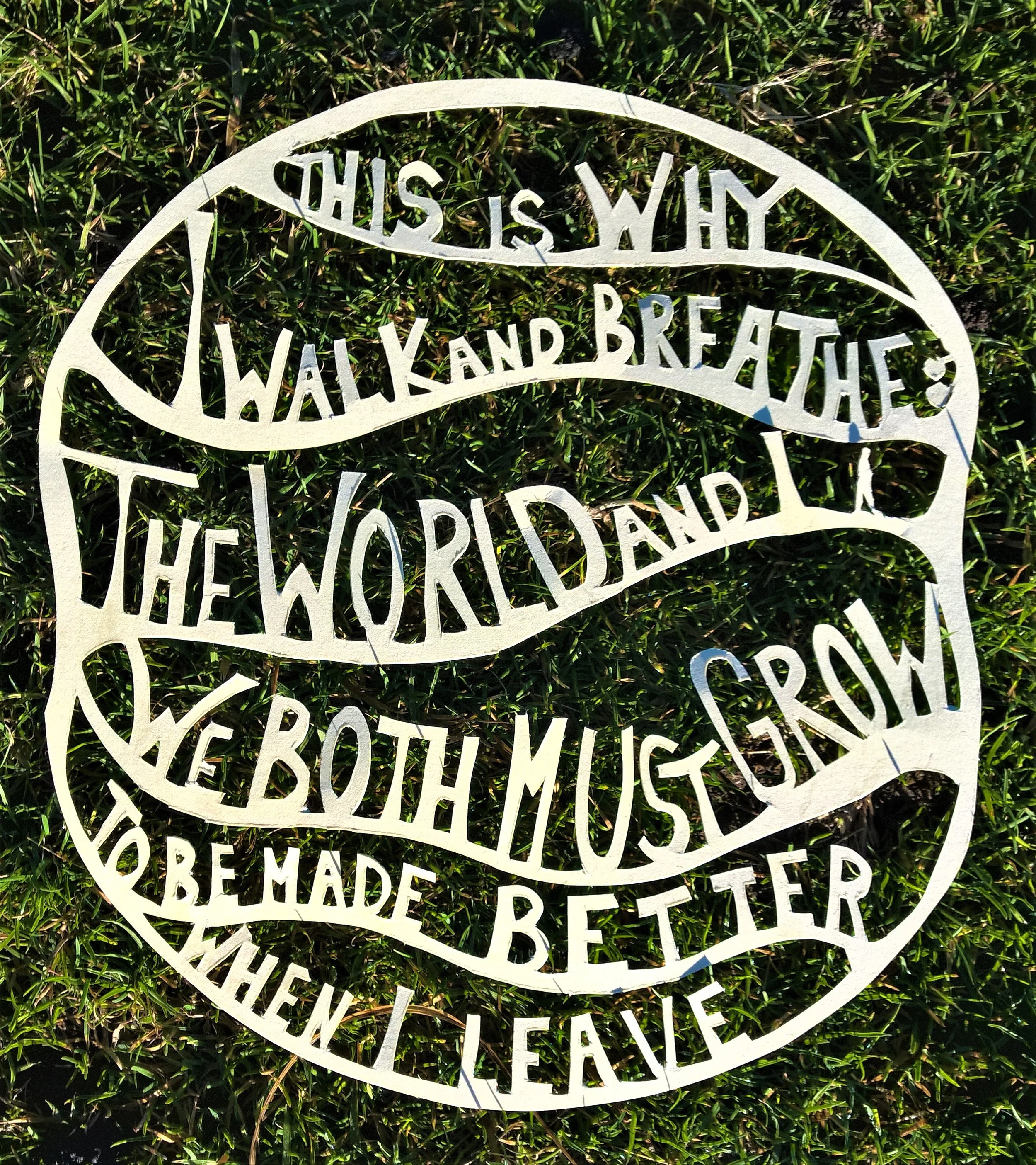
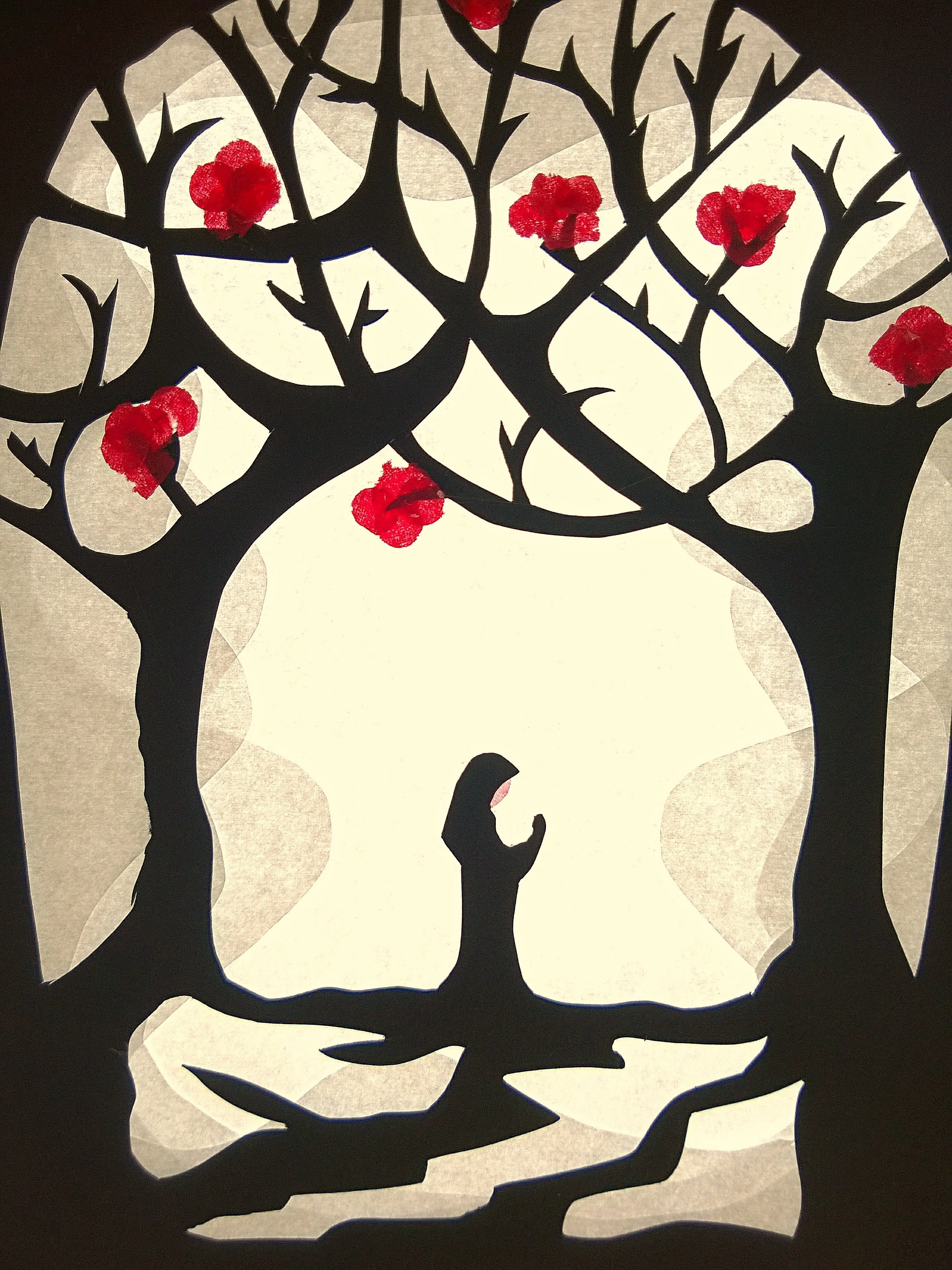
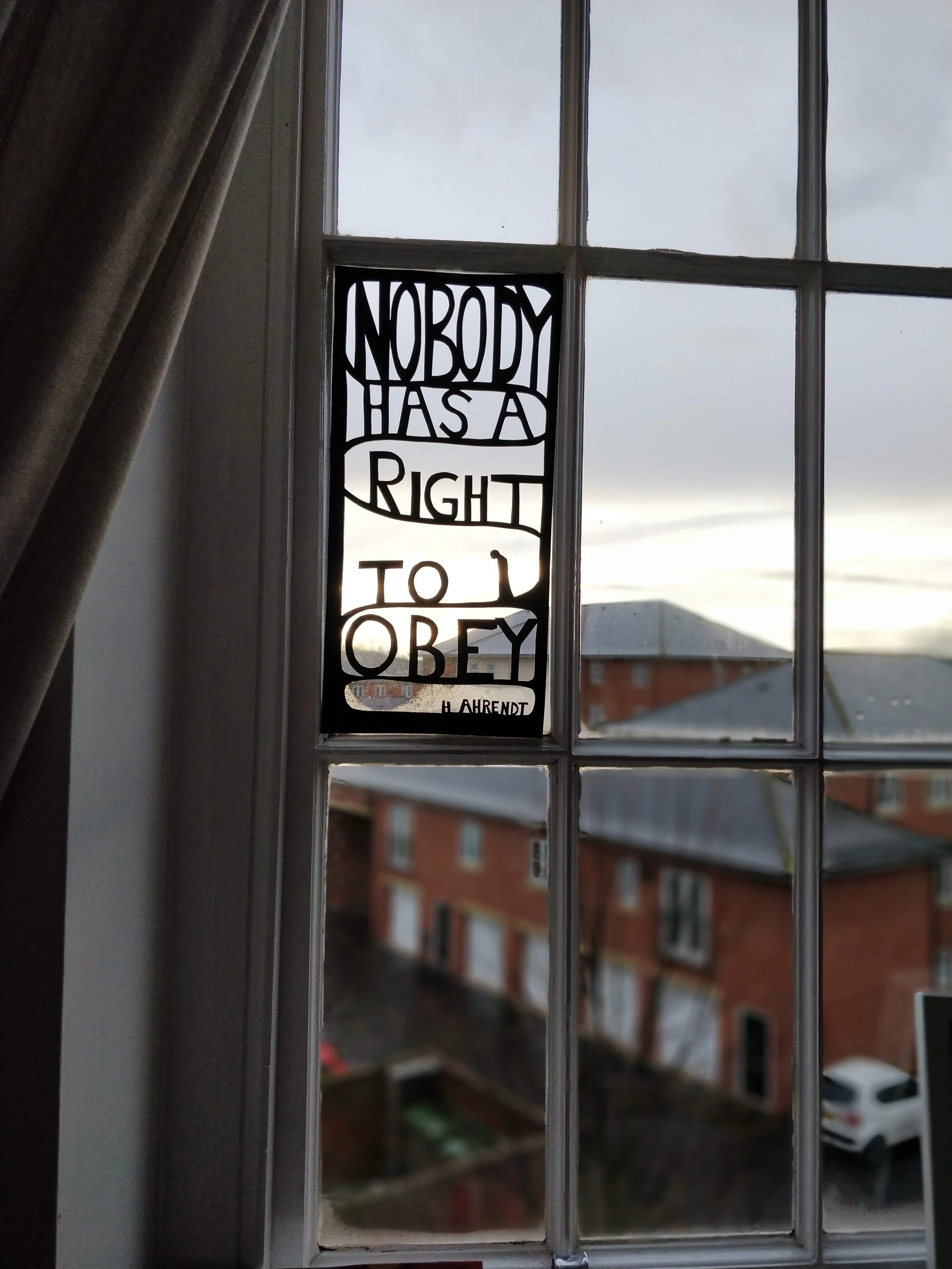
In this workshop participants will learn how to create evocative images from paper. Quotes and pictures will acquire new eloquence when placed before a background. No experience needed. Please bring a cutting mat if possible. Cards and knives will be provided. This work can be a private pastime but also used effectively in classrooms with older pupils.
Chords of Connection: Music
Music. It is all around us - From the rhythms of nature, to mother’s lullabies, to rustic folk songs, to film music, to classical masterpieces. It weaves itself differently into everyone’s journey.
But have we wondered about what lies beneath the surface of music? What truly makes music, music? What makes it a universal language, transcending boundaries and cultures?
This session invites you to explore the many ways music finds expression in our lives, across genres and traditions. All you need to bring along is your love for music.
Work with Clay
This workshop will guide participants through the clay curriculum from Grades 1 to 10. Clay modelling invites children into immersive, hands-on work with natural earth, supporting exploration of the three-dimensional form while developing artistic sensitivity. Through handling the material, and at times struggling with it, participants will learn how clay work can strengthen emotional intelligence and facilitate a meaningful connection with the outer world through inner work.
Rhythm of Hands: Handwork
This handwork workshop unfolds in a gentle rhythm, where hands engage with clay, yarn, crochet puppets, and simple natural materials. Through steady movement and repetition, forms slowly emerge, with focus resting on the process rather than the outcome. Time and patience invite joy, inner peace, and harmony. As days pass, quiet connections take shape, and finally all creations are gathered on the story table, where a living story comes to life through the work of the hands.
Sessions Offered for 4 days
22nd—25th
Where Body, Voice and Space Intersect: Theatre in High School
Enabling Expression, Expanding Perspectives, and Nurturing Confidence in the Adolescent Years
This workshop draws on our practice as high school drama teachers and our lived experience of theatre as a transformative space for adolescents. We explore body and voice work, improvisation, and engagement with text, while creating space for reflection and integration. Teachers are invited to experience theatre as a learning process and carry embodied insights back into the classroom, fostering meaningful cross-curricular connections. Through this work, we deepen our understanding of the adolescent learner and support teachers in creating engaged, thoughtful spaces for learning, expression, and movement.
Writing Poetry for & with Children
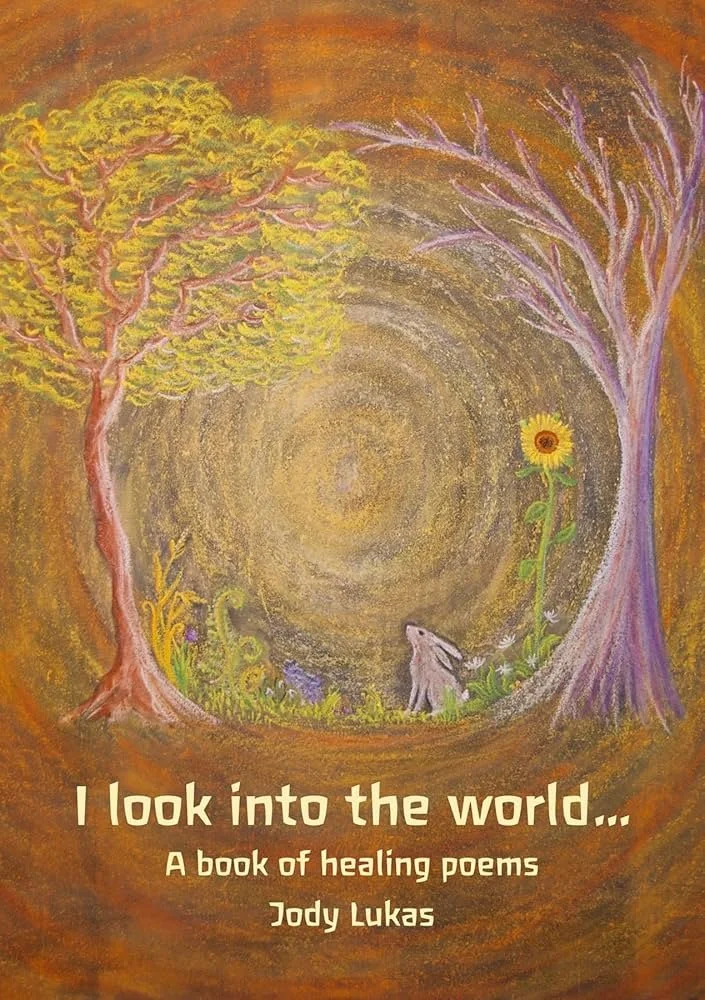
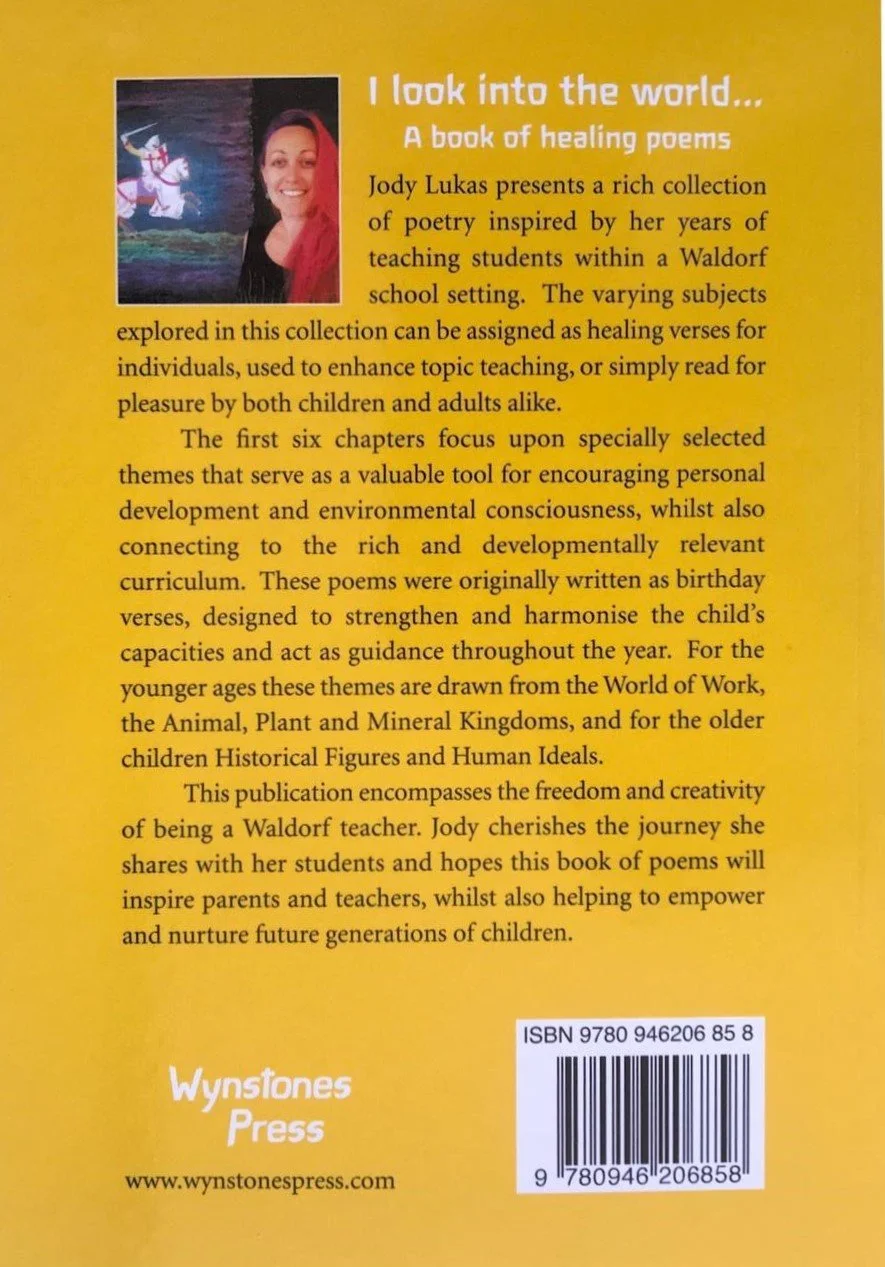
This four-day workshop explores writing poetry for and with children as a formative, healing practice. Participants will work with birthday and report verses as ways of truly seeing the child — strengthening what is healthy and gently indicating paths for growth. Through guided reflection, we will practise identifying a guiding star for the child and shaping this into verse, with careful attention to sound, rhythm, and imagery. We will also explore writing poetry with children inspired by the curriculum across the grades, deepening our relationship to the spoken and written word.
Map, Measure, Shrink and Make!
Making Scale models
We will:
· Work in small groups (ideally of 2 or 3).
· Choose a room/space/area/object in or around the school
· Measure it as accurately as possible.
· Shrink the measurements to your chosen scale.
· Make a 3D model with card, glue and tape.
· Discuss how we could do all this with our own classes*.
(* Ideal for Grades 6,7,8.)
No phones or calculators allowed!
If possible: bring a tape measure, scissors or cutting knife.
Don’t worry if you can’t or if you forget!
Perspective Drawing
In Grade 7, students move into one-point perspective, alongside their study of medieval history and the Renaissance. They learn to see and draw the world spatially, for the first time coming close to a real understanding of depth (much like the masters of Renaissance) translating three-dimensional space onto a flat surface.
Bothmer Gymnastics
Bothmer gymnastics, developed by Fritz von Bothmer works with coordination, balance, and spatial orientation through structured exercises and games. Practised with awareness, it supports an inner connection, strengthens presence and social awareness. In this 4 day workshop you will experience the exercises and games as well understand the principle behind it, which will equip you to take them to your own classrooms.
Where Colours Whisper, Forms Appear: Wet-on-Wet Painting
In this workshop, we will explore the individuality of colours through Goethe’s colour wheel. Adopting an immersive approach, participants will be encouraged to experience colours deeply. The initial emphasis will be on painting out of colour rather than form and on working with surface instead of line. From this foundation, we will gently explore how form can arise from the background, gradually evolving toward more intricate and expressive forms. Overall, it will be a nurturing experience that enables teachers to foster emotional balance and inspire creative freedom in their classrooms.
Sessions Offered for 3 days
27th—30th
Creative Speech & Drama Games
through the grades
This three-day workshop explores Anthroposophical Creative Speech as a means of supporting children’s (and teachers') health and wellbeing throughout the class teacher years. Participants will work with speech exercises, verses and movements that strengthen breathing, articulation, and the etheric forces. Alongside this, we will explore games and playful exercises that support language development, self-expression and incarnation while strengthening body awareness, speech formation, and group cohesion. Practical tools will be offered for everyday rhythmic work and for preparing a class play.
Soft Pastel Drawing
Around grade 5, the children begin working with soft pastels — a medium that is easy to use yet demands sensitivity and observation. But teachers can start exploring it much earlier. Join us to work with soft pastels through ancient cultures, geography, mineral and plant studies. We explore colour, texture, layering, blending, and the effects of different backgrounds.